7 Things You Need Before You Start a Podcast (According to a Podcast Coach)
| TL;DR: Podcasting isn’t for everyone, and knowing that before you start can save you months of frustration. A podcast coach breaks down the 7 things you actually need before you hit record. |
There’s a side of podcasting that people don’t talk about enough.
The highlight reels make it look easy: microphones, studio setups, viral clips, sponsorships, and download milestones. But the more I help people launch their podcasts and build their shows, I’ve realized something important:
Podcasting isn’t for everyone.
Think of it just like entrepreneurship isn’t for everyone. That’s not meant to discourage anyone. It’s meant to help people understand what podcasting actually requires before they start.
Because podcasting is not a “get rich quick” scheme AT ALL. It’s a long-term commitment that requires consistency, patience, strategy, and a deep reason for why you’re doing it in the first place.
Some people start a podcast expecting overnight success or solely focusing on monetization. But the podcasters who make it past the 10th episode (which is less than 10% of them) are the ones who understand that growth takes time.
If you’re thinking about starting a podcast, here are the 7 things that truly help someone become a successful podcaster.
Ready to start your podcast the right way? Explore podcast coaching services.
1. A Long-Term Vision for Your Podcast
One of the biggest things I’ve noticed when working with aspiring podcasters is this:
The people who succeed think long-term.
They’re not just focused on launching episode one. They’re thinking about:
- What they want the podcast to become
- Who they want to impact
- How the show fits into their bigger mission and/or their business
- What conversations they want to keep having years from now
- Which underrepresented voices they want to amplify
Podcasting rewards consistency over time.
Many podcasts stop before their 10th episode because people underestimate how much work it takes to sustain a show. (One of the main reasons I became a podcast launch coach.) But when you have a long-term vision, you stop obsessing over instant results and start building something meaningful.
A podcast is like planting seeds. Think of each episode as a brick adding to your overall house foundation. The episodes you publish today can continue working for you months or even years later through search engines, social media, word of mouth, and podcast SEO.
Related: Why Every Entrepreneur Should Consider Starting a Podcast — the long game and why it’s worth playing.
2. Patience — More Than You Think You’ll Need
Podcast growth can feel slow in the beginning. Actually, no, scratch that, podcast growth is slow in the beginning. Unless you are an influencer with a huge following, podcast growth is slow.
You might spend hours recording, editing, writing show notes, creating clips, and promoting episodes only to see a small number of downloads at first.
That’s normal.
And let me tell you the actual numbers: according to BuzzSprout, the average podcast episode gets about 27 to 30 downloads within the first 7 days.
Podcasting requires patience because trust takes time to build. Audiences don’t usually become loyal overnight. They come back because you consistently show up, provide value, and create content that resonates with them. I do believe podcasting is the fastest way to build trust with your audience because it’s the medium where they spend the most time with you.
The podcasters who win are often the ones who kept going when nobody was watching yet.
3. Consistency — Built on Systems, Not Motivation
Consistency matters more than perfection. But in order to build that consistency, you need systems.
A successful podcast isn’t built on one viral episode. It’s built on repeatedly showing up.
That means:
- Recording even when you don’t feel motivated
- Publishing episodes regularly
- Staying committed during slow seasons
- Continuing to improve your craft over time
Many people love the idea of podcasting, but not everyone loves the process enough to stay consistent.
And the process is where growth happens.
Read more: My Process for Planning Solo Podcast Episodes — how to build a system that keeps you consistent.
4. A Clear “Why” That Goes Deeper Than Money
If your only reason for starting a podcast is money, you’ll burn out quickly.
Podcasting takes time before it becomes profitable for most creators (unless you’re tying the podcast to your business, but that’s a different story). That’s why having a deeper reason matters.
Maybe your podcast exists to:
- Share stories that deserve to be heard
- Educate people
- Build community
- Grow your business
- Preserve culture and experiences
- Inspire others through storytelling
Your “why” is what keeps you going when the numbers feel discouraging.
Listeners can also tell when someone genuinely cares about the conversations they’re having. Energy doesn’t lie.
Not sure what kind of podcast fits your why? Take the quiz to find out ?
5. The Ability to Keep Learning
Podcasting is constantly evolving.
Marketing strategies shift. SEO improves discoverability. Platforms update features. Audience behavior changes.
Great podcasters stay curious, adaptable, and consistently learning.
They learn:
- How to improve their interviews
- How to become better storytellers
- How to optimize their podcast for search
- How to repurpose content
- How to market their episodes effectively
The best podcasters are students of their craft. And obviously, as a podcast coach, I have to stay up to date with the changes to bring you the latest.
Related: Get Your Blog Recommended by AI: SEO Updates Every Podcaster Needs to Know
6. Resilience — Because Not Every Episode Will Land
Not every episode will perform well.
Not everyone will support your podcast. Those friends and family members who you thought would? Probably won’t.
Some episodes may take hours to create and still not get the response you hoped for. There may be moments when you question whether it’s worth continuing. This is normal.
Podcasting requires resilience because growth often happens quietly before it becomes visible.
You have to believe in what you’re building before the results fully show up. Much like entrepreneurship, amiright?
Related: 3 Ways to Grow Your Podcast (That Actually Work) — what to focus on when growth feels slow.
7. A Genuine Love for Conversations and Connection
At its core, podcasting is about connection. And I think this is why I enjoy podcasting so much. I genuinely love connecting with others, and podcasting has brought so many great connections.
Whether you host solo episodes or interviews, podcasting is about making people feel seen, understood, informed, or inspired.
People don’t just return for information. They return because they feel connected to the host and the stories being shared.
The strongest podcasts create trust and community over time. And let me add that the podcasting community overall is the most supportive community I’ve been a part of.
Thinking about whether to do interviews or solo episodes? Podcasting vs. YouTube Channel: Why They’re Not the Same might help you decide on your format.
Podcasting Is a Commitment, Not Just Content
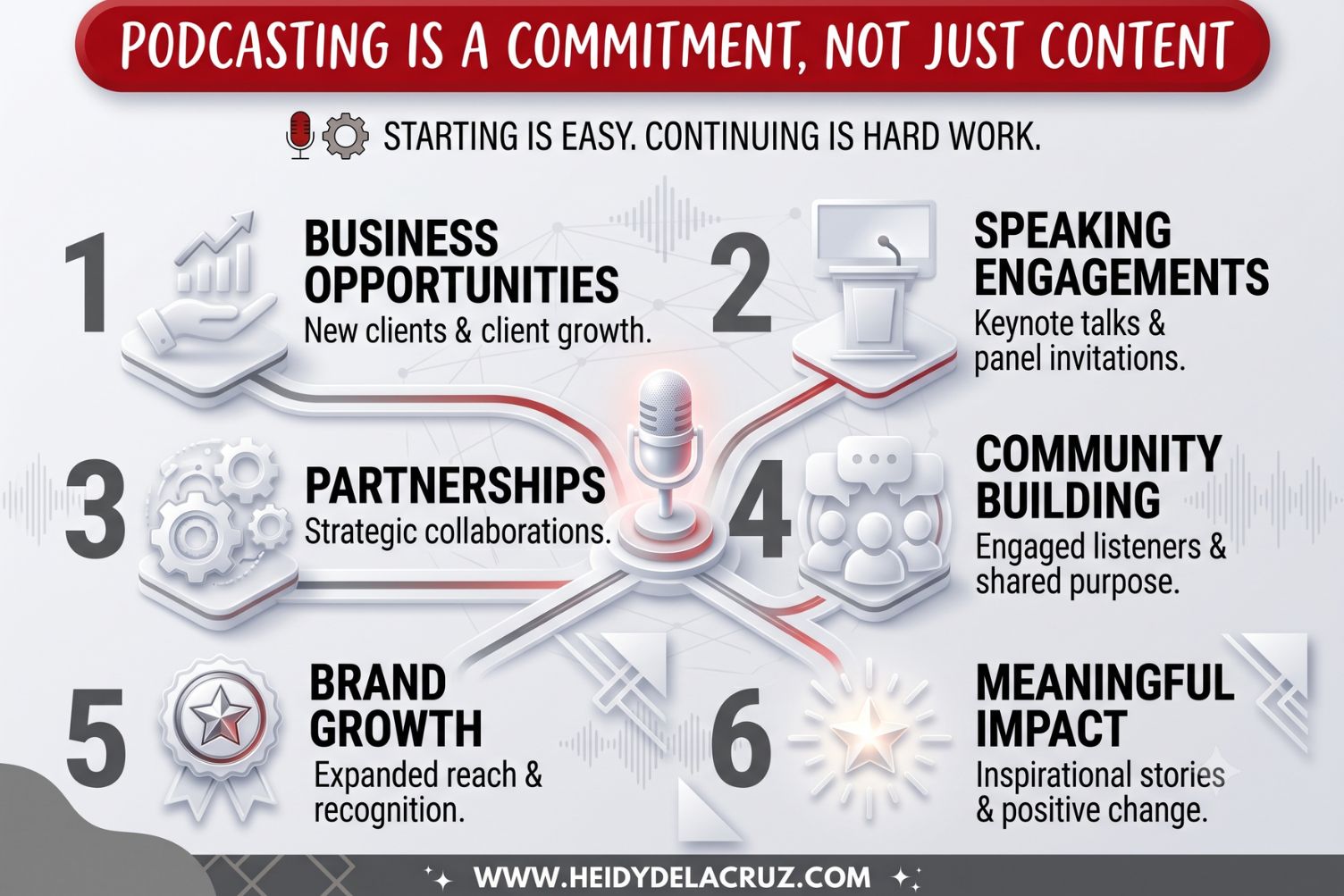
Starting a podcast is easy.
Continuing a podcast is where the real work begins.
Podcasting can absolutely open doors:
- Business opportunities
- Speaking engagements
- Partnerships
- Community building
- Brand growth
- Meaningful impact
But those opportunities usually come from consistency over time, not overnight success. (Overnight success is actually 10 years of consistent work.)
The podcasters who last are often the ones who understand that they are building something bigger than downloads. They are building trust, authority, relationships, community, and a body of work that compounds over time.
And that’s why podcasting isn’t for everyone.
But for the people willing to play the long game, it can become one of the most rewarding platforms to grow a message, a business, and a community.
FAQ: Starting a Podcast
How do I know if I’m ready to start a podcast?
If you have a clear why, a topic you can talk about consistently, and the patience to play the long game, you’re ready. You don’t need perfect equipment or a big audience. You need a reason to show up and the commitment to keep going past episode 10.
How long does it take to see results from a podcast?
Most podcasters start seeing meaningful traction between 6 and 12 months of consistent publishing. The keyword is consistent. One episode a month for a year will do more for you than 10 episodes published in a rush and then nothing.
Do I need a podcast coach to start a podcast?
You don’t need one — but working with a podcast coach can save you months of trial and error. A coach helps you launch with a strategy instead of figuring it out alone. Especially if you want your podcast to support your business, having the right foundation from day one makes a real difference.
About the Author & Podcast Coach
Heidy De La Cruz is a podcast coach who helps Latinas start podcasts without feeling overwhelmed.
After launching her first podcast in 2022, she saw how many women had powerful stories, experiences, and business ideas but felt stuck by the planning, tech, and moving parts of podcasting.
Now she helps women go from idea to published show with simple, clear support that makes launching feel doable.
Whether you need a roadmap, hands-on help, or ongoing support, explore her services, including 1:1 Podcast Launch Strategy, The V.O.I.C.E. Method Podcast Launch Course, and Podcast Editing and Production Services.
Your voice deserves to be heard, and Heidy is here to help you bring it to life.
Key Takeaways
- Podcasting is a long game — the podcasters who make it are the ones who think beyond episode one.
- Growth is slow at first. The average episode gets 27–30 downloads in the first 7 days. That’s normal.
- Consistency matters more than perfection — but consistency requires systems, not just motivation.
- Your “why” is what keeps you going when the numbers feel discouraging.
- Less than 10% of podcasters make it past episode 10. Knowing what it takes before you start puts you ahead of most.
With Love, Heidy
Related Resources
- Why Every Entrepreneur Should Consider Starting a Podcast — Why a podcast is one of the smartest business moves you can make.
- My Process for Planning Solo Podcast Episodes — Build the consistency system that keeps your show going.
- 3 Ways to Grow Your Podcast (That Actually Work) — What to focus on once you’re up and running.
- Podcasting vs. YouTube Channel: Why They’re Not the Same — Deciding on your platform before you launch.
- 4 Podcast Coaching Services to Help You Launch, Grow, and Actually See Results — Find the right level of support for where you are right now.