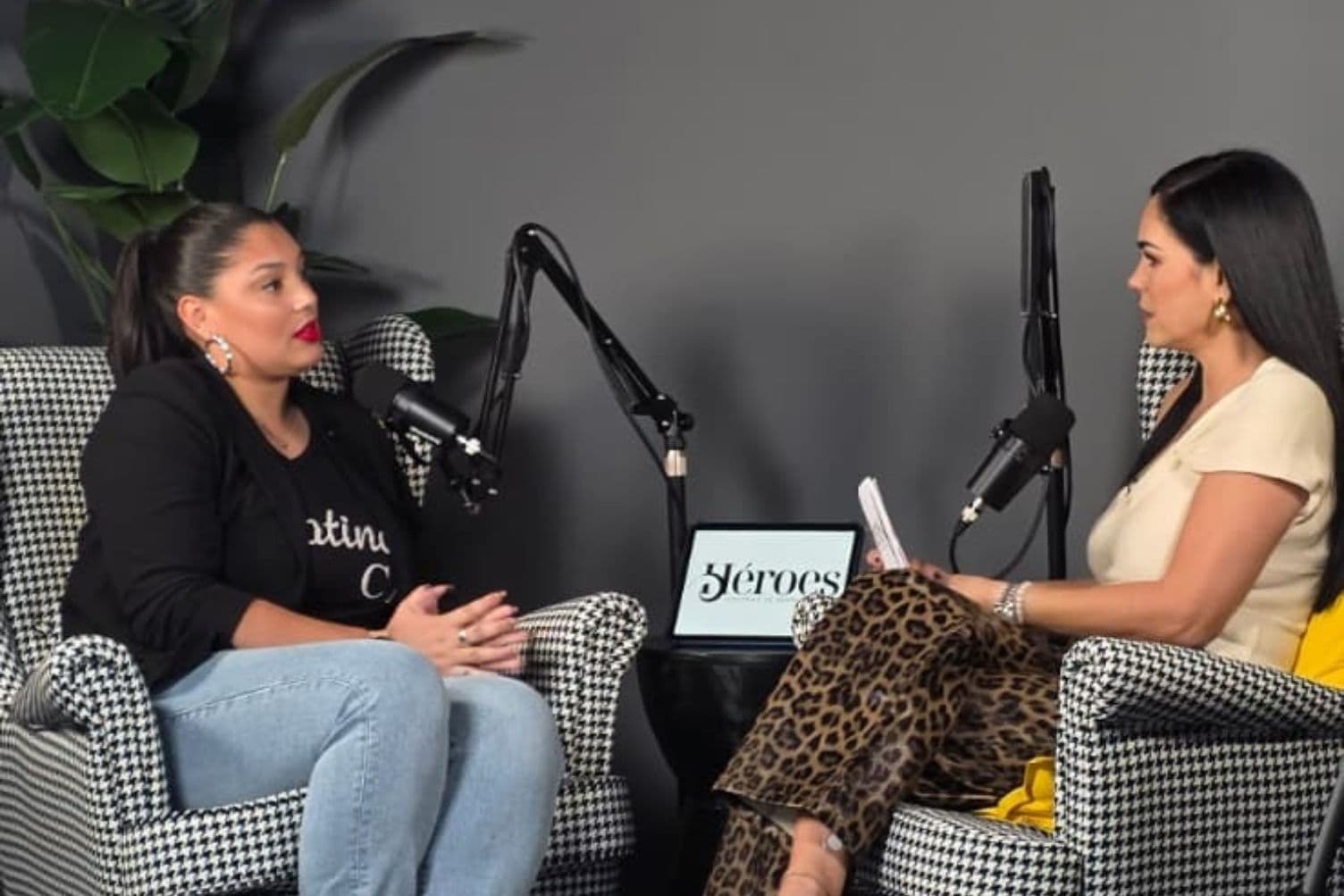
Latinas, Our Story Matters: Why Podcasting Is a Powerful Tool for Us
| TL;DR: 43% of U.S. Latinos are monthly podcast listeners, up 72% since 2020. But women of color make up only 7% of top podcast hosts. The audience is there. The gap is big, and Latinas are closing it one episode at a time. |
You have probably felt it. You scroll through podcast apps looking for a voice that sounds like yours, a story that holds your specific kind of complicated, and you come up mostly empty. That feeling is normal for us Latinas, and the reality is backed by data.
According to the Annenberg Inclusion Initiative, women of color made up only 7% of hosts in the top 100 podcasts of 2024. Seven percent. In an industry that has been growing for over a decade, the most visible shows still reflect a very narrow slice of who actually lives in this country and who is actually listening.
And Latinas are listening. The Latino Podcast Listener Report 2024, produced by Edison Research and SSRS, found that 43% of U.S. Latinos age 18 and older are now monthly podcast listeners, a 72% increase since 2020. The audience is not waiting to be convinced. It is already there, already growing, already demanding content that reflects its actual life. More on this below.
Why Latinas Are Underrepresented in Podcasting (And Why That Is Changing)
The mismatch between who is listening and who is hosting is not a talent gap. Multicultural communities in the U.S. show higher podcast creator engagement compared to white creators, according to Sounds Profitable’s 2025 creator report. The drive to self-produce is already there. What is missing is infrastructure, visibility, and the cultural permission to take up space in a medium that was not designed with us in mind.
The Real Reason More Latinas Are Not Podcasting Yet
That last part matters. The barrier for many Latinas is not technical; it is the quiet, persistent message that mainstream media has sent for years: your story is too specific, your accent is too much, your audience is too niche. Those messages are false, and the numbers make that plain. The gap is real, and we need to close it! And the women closing it are doing so without waiting for an invitation.
Ready to build your table? Check out The V.O.I.C.E. Method Podcast Launch Course
How Podcasting for Latinas Builds More Than an Audience
When a Latina launches a podcast, she is not just creating content. She is building a seat at a table that was never built with her in mind, and in doing so, she makes it easier for every Latina who comes after her to sit down.
This reframe matters because the dominant narrative around podcasting positions it as a personal brand exercise, a solo endeavor measured in downloads and sponsorship deals. That framing misses what is actually happening in Latino listening culture. According to Edison Research’s 2025 cultural connection study, 55% of Spanish-language podcast listeners say more stories from Latinos would increase their listening time, and 52% specifically want more content hosted by Latinos. Listeners are not just consuming audio. They are seeking belonging.
Your community is already listening; they are just waiting for a voice that sounds like theirs to show up in their feed.
The Empty Chair Analogy
There is no gatekeeper in podcasting, which is why I always say podcasting is low-barrier to enter! No application to submit, no mainstream editor deciding whether your story is marketable enough, no network executive greenlighting your pitch. The chair does not get pulled out for you, but you can build your own table. And you can do it in six weeks without asking anyone’s permission.
Check out The V.O.I.C.E. Method
Podcasting is the only media format where the only permission you need to begin is your own.
This is genuinely different from every other media format. Television, film, and print publishing all have institutional chokepoints where representation fails. Podcasting removes most of them. The barrier is not access to a studio or a network deal. It is the internal permission to begin.
Dalia Katan, innovation strategist and entrepreneur, put it plainly: Katan has noted that Latinas are often boxed in as a single group when the reality is a spectrum of nationalities, cultures, and languages that mainstream media consistently flattens. A podcast built by a Latina, for her community, refuses that flattening. It holds the full complexity.
What Is Actually Holding Latinas Back From Starting a Podcast
The fears are real and worth naming directly. The accent. The niche that feels too small. The worry that no one will listen, or worse, that the wrong people will. The sense that you need more credentials, better equipment, a more polished version of yourself before you start.
Check out: 8 Fears Holding Latinas Back From Starting Their Podcast
None of those fears are irrational. They are the predictable result of spending years in a media environment that told you, implicitly and explicitly, that your voice required more justification than others. Naming that is not victimhood. It is accuracy. And accuracy is the first step toward moving through it.
The community aspect of podcasting is exactly what makes those fears smaller in practice. When you launch, you are not performing for strangers. You are showing up for the woman who has been searching for a show that holds her specific story. She is already out there. iHeartMedia’s research found that 63% of bicultural Latinos tune into podcasts weekly, a group that represents nearly 40% of all U.S. Latinos. The audience is not hypothetical.
Also, we’re a whole community! Check out – Latinas In Podcasting
The Story You Are Carrying Is Already Someone Else’s Answer
Specificity is not a limitation in podcasting. It is the mechanism of reach. The story that feels too personal, too rooted in one culture or one experience, is often the one that travels farthest, because it carries the kind of detail that makes a listener feel genuinely seen rather than vaguely included.
I’ve built my show, The American Dream in the Eyes of Immigrants, from exactly that kind of specificity. An immigrant story. A particular cultural lens. A voice that did not sand down its edges to appeal to a broader, blander audience. The story that could have felt too niche reached a global audience precisely because it was specific enough to be real.
The story that feels too specific, too personal, too much, that is exactly the one that reaches 100 countries, not despite its specificity, but because of it.
The Latina Podcasting Community That Is Closing the Representation Gap
One reason more Latinas are launching now is that the infrastructure to support them is finally being built, often by other Latinas. The Latinas in Podcasting initiative, established in 2024, provides mentorship, networking, and education specifically designed to address the exclusion of Latina voices from mainstream media spaces. Initiatives like this exist because the mainstream industry has not filled this gap on its own.
The industry is beginning to acknowledge the production gap in other ways too. A 2025 partnership between Telemundo Studios and the University of Miami launched a podcast incubator specifically for Latino creators, recognizing that while millions of podcasts exist, fewer than 12% are in Spanish. That number is striking given the size and growth of Spanish-speaking podcast audiences in the U.S. The gap is not a mystery. It is a documented reality that creator-led infrastructure is working to close.
Six Weeks as a Runway, Not a Deadline
The paralysis of open-ended planning is one of the most common reasons Latinas with real stories and real audiences stay in the preparation phase indefinitely. The podcast that has been “almost ready” for two years is not a failure of commitment. It is a failure of structure.
A clear six-week structure turns the endless preparation loop into a launchpad with a visible finish line.
The V.O.I.C.E. Method exists to solve exactly that. It is a six-week framework that takes a Latina from idea to launched show, removing the decision fatigue and tech overwhelm that keep most people stuck. Six weeks is not a deadline designed to pressure you. It is a runway long enough to build something real and short enough that the goal stays visible the whole time. The path exists. It has been walked. The question is whether you are ready to take the first step on it.
Yudy Veras Bueno, Founder and Executive Director of Inspirame Latina, describes the work of reclaiming your voice as practical and urgent: Veras Bueno frames it as embracing social media and owning your story with courage, not waiting until the fear disappears, but moving forward while it is still present. That framing resonates because it is honest. The courage is not the absence of fear. It is the decision to record anyway.
Why Every Latina Who Launches a Podcast Changes the Game for the Next One
Every Latina who launches a podcast changes the math for the next one. Not in an abstract, inspirational sense, but in a concrete, algorithmic one. More Latina-hosted shows in the feed means more visibility, more discoverability, more proof to the listener who is still searching that her story has a home in this medium.
Mirtle Peña-Calderón, Founder of Latinidad Collective, put it directly: when the industry does not make space, you make your own. That is what is happening right now across Latino podcasting. Creators are not waiting for mainstream validation. They are building the infrastructure, the audiences, and the cultural record themselves.
This is not just content creation. It is cultural reclamation, one episode at a time, one voice at a time, one Latina deciding she does not need permission to be heard.
If your show has been living in your head, mija, the audience is already waiting. The only thing left is to start.
The V.O.I.C.E. Method coaching program is the structured path from where you are right now to a launched show in six weeks. Learn more about working with me and what that process looks like from the inside.
What the Data Actually Tells Us: A Quick Reference
| Metric | Finding | Source |
|---|---|---|
| Latino monthly podcast listeners (2024) | 43% of U.S. Latinos 18+, up 72% since 2020 | Edison Research / SSRS |
| Women of color as podcast hosts (2024) | 7% of top 100 podcast hosts | Annenberg Inclusion Initiative |
| Spanish-language listeners wanting more Latino hosts | 52% want more Latino-hosted content | Edison Research 2025 |
| Bicultural Latino weekly podcast listeners | 63% tune in weekly | iHeartMedia |
| Podcasts available in Spanish | Fewer than 12% of all podcasts | LatinaMedia.Co |
FAQ: Podcasting for Latinas
Does my accent matter when starting a podcast?
No. Your accent is part of your identity, not a disqualifier. The data shows that Latino podcast listeners specifically want more hosts who sound like them and reflect their actual experience. Your accent is not a barrier to reach. For the right audience, it is a signal that you are the voice they have been looking for.
Do I need to podcast in Spanish or English as a Latina?
That is entirely your choice and depends on your audience. Fewer than 12% of all podcasts are in Spanish, which means there is enormous opportunity in Spanish-language content. But English-language podcasts hosted by Latinas are equally needed and equally powerful. Many Latina podcasters also mix both languages, which is a natural reflection of bicultural life. There is no wrong answer here.
Is there a community for Latina podcasters?
Yes. Latinas in Podcasting is an initiative launched in 2024 specifically to provide mentorship, networking, and education for Latina creators. The podcasting community overall is one of the most supportive creative communities out there, and within it, Latina-specific spaces are growing. You do not have to figure this out alone.
How do I start a podcast as a Latina with no experience?
You start before you feel ready. The V.O.I.C.E. Method is a six-week framework designed specifically for women who have a story to tell and need a clear, structured path to get their show launched without the overwhelm. You do not need prior experience. You need a starting point.
About the Author & Podcast Coach
Heidy De La Cruz is a podcast coach, host, and creator of the V.O.I.C.E. Method. Her podcast The American Dream in the Eyes of Immigrants is a 2-time award winner recognized by the Women in Podcasting Awards and Women Who Podcast. It ranks in the top 5% of podcasts globally, #1 on GoodPods for Immigration, and holds #1 keyword rankings on both Spotify and Apple Podcasts.
After launching her first podcast in 2022, she saw how many women had powerful stories, business ideas, and something worth saying but felt completely stuck by the tech, the moving parts, and the lack of a clear starting point.
Now she helps aspiring podcasters go from idea to live show with clear, hands-on support that makes launching feel doable instead of overwhelming.
Explore her services: 1:1 Podcast Launch Strategy, The V.O.I.C.E. Method Podcast Launch Course, and Podcast Editing and Production Services.
Key Takeaways
- 43% of U.S. Latinos listen to podcasts monthly. The audience is there.
- Only 7% of top podcast hosts are women of color. The gap is real.
- The barrier for most Latinas is not technical. It is internal permission.
- Specificity is not a limitation. It is how you reach 100 countries.
- Podcasting is the only media format that needs no gatekeeper approval.
- Every Latina who launches changes the math for the next one.
- Six weeks is enough to go from idea to launched show.
- The audience is already waiting. The only thing left is to start.
Your Voice Belongs in This Space
The V.O.I.C.E. Method coaching program is the structured path from where you are right now to a launched show in six weeks.
Learn more about working with me and what that process looks like from the inside
With Love, Heidy